
Montgomery County Civil Court Records
Montgomery County sits just north of Philadelphia and is one of the most populated counties in the state. The Court of Common Pleas for the 38th Judicial District handles all civil matters here. The Prothonotary is the elected civil clerk of this court and manages the intake, storage, and release of civil case files. The courthouse stands at 2 East Airy Street in Norristown, the county seat. Civil filings range from small debt claims to large personal injury suits. All records are kept at the Prothonotary office and most are open to the public under state law.
Montgomery County Quick Facts
Montgomery County Prothonotary Office
The Prothonotary is an elected post in Montgomery County. This office acts as the civil clerk for the Court of Common Pleas. All civil case filings pass through it. The staff files new complaints, logs motions, and stores the full case record. They also handle requests for copies of civil court records.
You can reach the office in person at the courthouse in Norristown. The Montgomery County Prothonotary page lists hours, forms, and contact details.
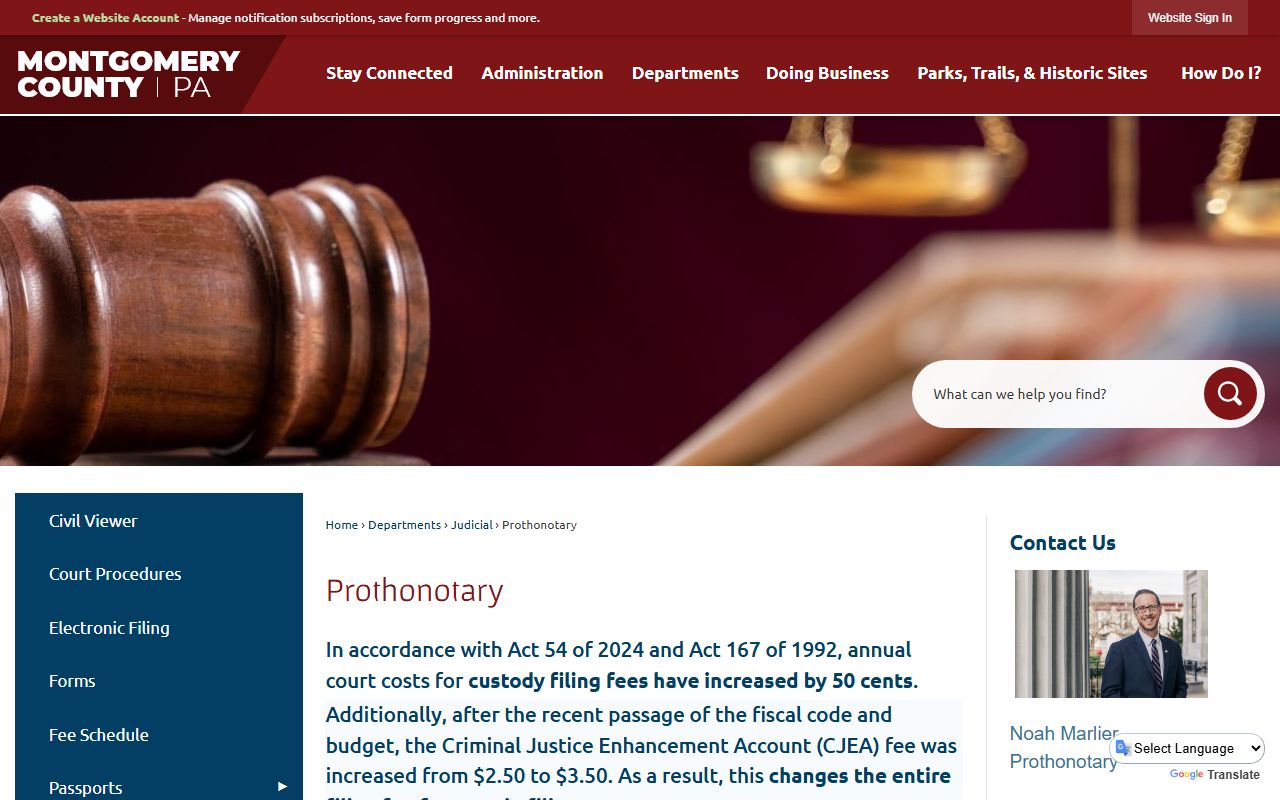
The site gives you access to forms and fee schedules for civil filings in Montgomery County.
The office accepts money orders, attorney checks, and cash for fees. Debit and credit cards are also taken. Personal checks are not accepted. Call ahead to confirm the exact cost of any filing or copy you need. Act 54 of 2024 and Act 167 of 1992 raised custody filing fees by 50 cents. The CJEA fee went up from $2.50 to $3.50 as well. These small changes can add up, so it helps to know the current totals before you go.
| Office |
Montgomery County Prothonotary 2 East Airy Street Norristown, PA 19404 |
|---|---|
| Website | montgomerycountypa.gov/97/Prothonotary |
Montgomery County Civil Case Filings
The Court of Common Pleas in Montgomery County hears a wide range of civil matters. These cases form the bulk of civil court records on file at the Prothonotary office. Each case type follows its own set of rules, but all are filed and tracked in the same system.
Divorce and custody cases are among the most common filings. Change of name petitions go through this court as well. District court appeals come here when a party disagrees with a lower court ruling. Driver's license suspension appeals are filed in Common Pleas, too.
The court also handles judgments, mechanics liens, and federal income tax liens. Medical malpractice suits and personal injury claims make up a large share of the civil docket. Protection from abuse cases are filed here when someone seeks a PFA order. Each of these case types creates a record that the public can view.
The Montgomery County court records page explains how filings are organized and how to access them.
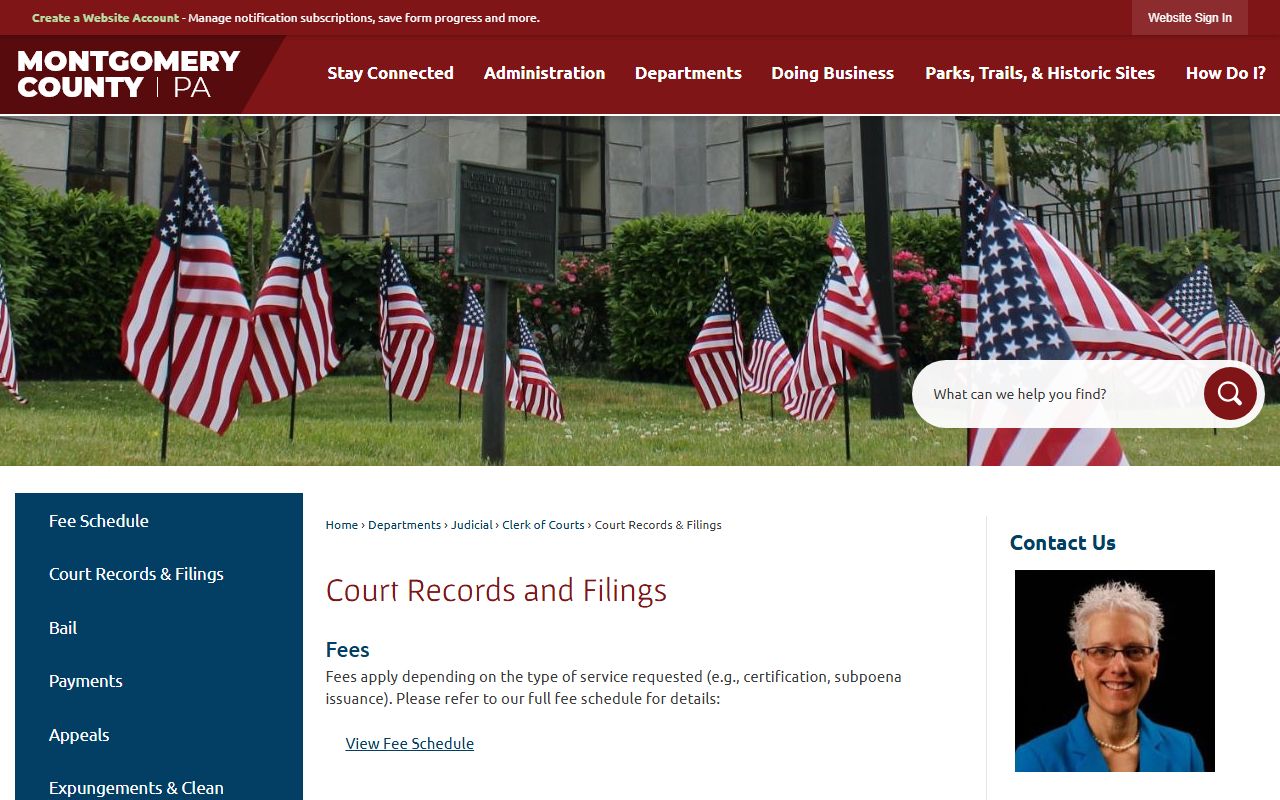
This page outlines what case types are on file and how to search or request copies of Montgomery County civil court records.
Searching Montgomery County Court Records
There are two main ways to look up civil court records in Montgomery County. You can visit the courthouse or use online tools. Each method has its strengths. In-person searches let you review the full file. Online tools give quick access to basic docket data from any location.
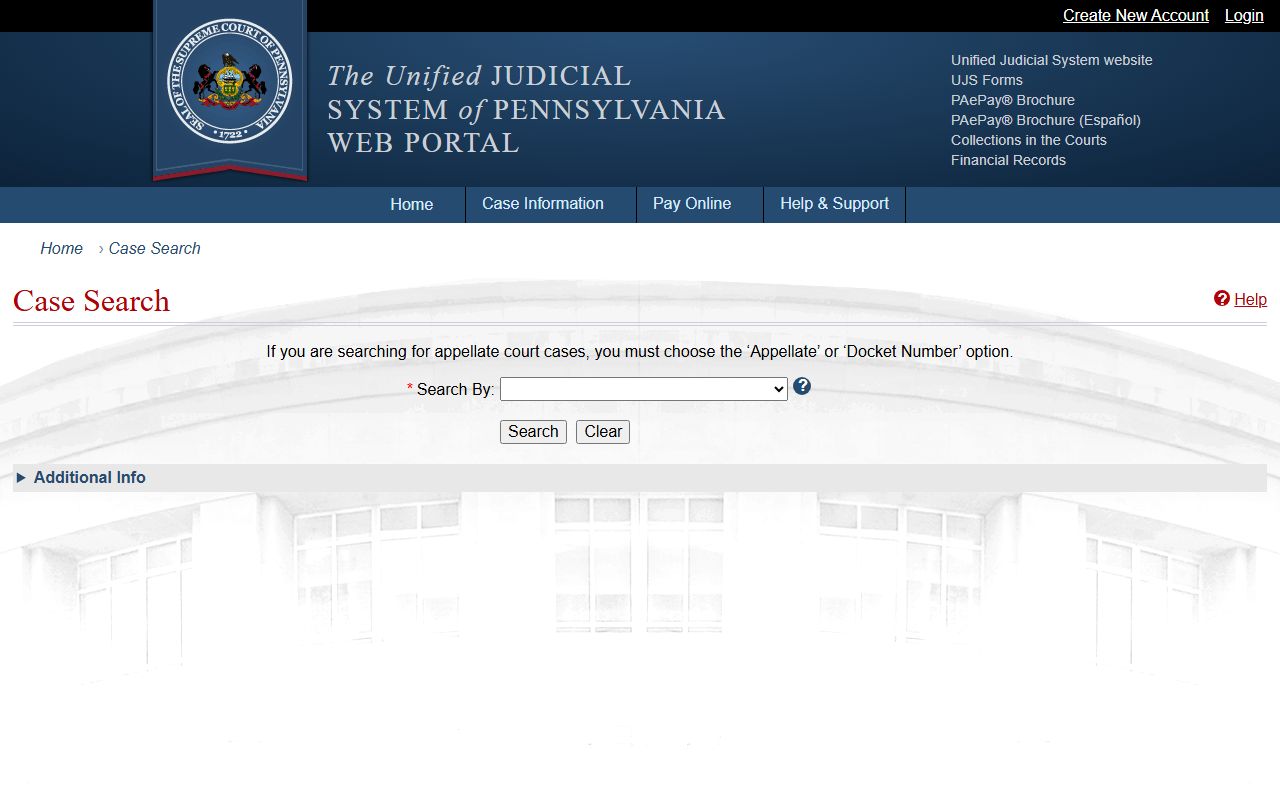
The PA UJS Portal is the statewide system for court record searches. You can look up cases by name or case number. The portal shows docket entries, case type, filing date, and party names. It covers civil filings from all 67 counties. For Montgomery County, the portal is a fast first step.
At the courthouse, the Prothonotary staff can pull case files for you to review. Bring a valid ID. If you know the case number, the search is quick. Name searches take a bit more time. You can ask for plain or certified copies of any document in a civil court record. Certified copies cost more, but they carry the court seal and are accepted as official documents.
Note that the criminal side of court records is handled by the Clerk of Courts, not the Prothonotary. The PA UJS Portal can be used for a criminal docket search. If you need certified criminal records, contact the Clerk of Courts in Montgomery County.
Public Access to Montgomery County Records
Most civil court records in Montgomery County are public. Under 204 Pa. Code § 213.81, the courts follow a statewide policy on public access to case records. This means anyone can ask to see a docket sheet or case document. You do not have to be a party to the case.
Some records are sealed by court order. Others are restricted by privacy laws. For instance, certain details in custody cases or PFA filings may be redacted. Social Security numbers and financial account numbers are removed from public copies. But the core of the record stays open.
The Pennsylvania courts public records policies page explains the full set of rules. It covers what is open, what is sealed, and how to challenge a denial.
This resource outlines the statewide rules on accessing civil court records, which apply in Montgomery County.
Under the Right-to-Know Law at 65 P.S. § 67.101, you can also request records from county agencies. Court records follow their own access rules, but other county documents fall under this law. The Montgomery County government site has details on how to submit open records requests.

The county site is useful for finding offices, phone numbers, and forms related to civil court records and other public documents in Montgomery County.
Montgomery County Civil Judgments and Liens
Judgments are a key part of civil court records. When a court decides a case, it enters a judgment. This order states who won and what is owed. In Montgomery County, judgments can attach as liens to real property. A buyer or title company will check for liens before any sale goes through.
Federal income tax liens filed in Montgomery County also appear in the civil court records. Mechanics liens come from contractors or suppliers who were not paid for work on a property. These liens give the filer a legal claim against the property until the debt is resolved.
You can search for judgments and liens at the Prothonotary office. This is standard practice before any real estate deal. Under 42 Pa.C.S. § 3732, the Court of Common Pleas has broad authority over civil matters, which includes entering and enforcing judgments in Montgomery County.
- Civil judgments from lawsuits
- Federal income tax liens
- Mechanics liens from contractors
- Judgment liens on real property
- Satisfied and unsatisfied judgment records
A satisfied judgment means the debt has been paid. The docket will show a satisfaction entry. This is an important detail to check when reviewing Montgomery County civil court records for lien information.
Filing a Civil Case in Montgomery County
To start a civil case, you file a complaint at the Prothonotary office. The complaint names the other party and sets out the claim. You pay the filing fee at the time of submission. The office assigns a docket number and the case enters the system.
Next, serve the other party. You can use the sheriff, a private process server, or another method allowed by law. File proof of service with the court. The other side then has a set number of days to respond.
Once the response is in, the case moves through discovery, motions, and possibly a hearing or trial. All documents filed along the way become part of the civil court records. Orders, rulings, and the final judgment are recorded on the docket.
If you have questions about fees or forms, contact the Prothonotary office. They can tell you the exact cost and what papers you need to file. Staff at the courthouse can help with basic questions, though they cannot give legal advice.
Nearby Counties
Montgomery County borders several other counties. Civil cases must be filed where the events occurred or where the parties reside. Check the address tied to the dispute to confirm the right county.